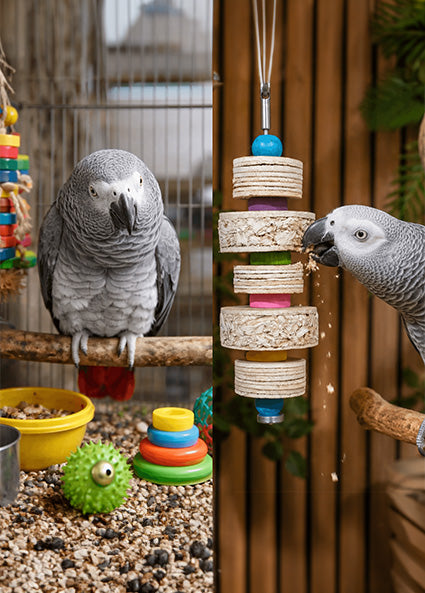
The Enrichment Playbook -Turn Play Into Well-Being

Birds aren't just "playing" - they're practicing the instincts that shape their emotional, physical, and cognitive health. In the wild, parrots spend most of their day foraging, shredding bark, exploring textures, climbing branches, and using their beaks and feet to solve small challenges. In our homes, enrichment toys are the key to giving them the same opportunities.

This guide helps you understand why each instinct matters, what signs to look for, and which toys to offer so your bird stays confident, busy, curious, and calm.

How to use this guide

This page breaks enrichment into five instinct-driven categories.

For each category, you'll see:

  • Why it matters
  • Offer this if you notice… (behaviour cues)
  • Start with… (toy recommendations based on difficulty)
  • Progress to… (for advanced birds)

This structure helps even new bird parents become confident enrichment planners.

Foraging

-

The Brain's Favourite Job

Why it matters:

Foraging is how parrots stay mentally sharp in the wild. It builds focus, confidence, and problem-solving ability. Birds that forage daily show fewer stress behaviours such as pacing, excessive vocalizing, or attention-seeking screams.

Decorative feather

Foraging

Builds focus, reduces stress

Offer Foraging Toy
(if you notice the below behavior)

  • Restless pacing or constant cage climbing
  • Loud repetitive calling for attentiondaily
  • Destroying toys quickly from boredom again
  • Waiting for food, not exploring much

Start with
(Beginner)

  • Open treat spots with easy access forthe birds
  • Palm-leaf cups and simple pockets together
  • Soft fibre coverings that lift open for easy finding
  • Loosen the wraps around treats lightly for visibility

Progress To
(Intermediate > Advanced)

  • Layered palm-leaf puzzles with hiding steps
  • Coconut shell foragers with deeper wells
  • Multi-step hide-and-pull toys for problem-solving fun
  • Wrapped puzzles requiring peeling, untying, or digging through layers

Why EKO Wings Toys Work:

Natural textures like palm leaf and banana stem mimic wild foraging surfaces-safe to shred, chew, peel, and search through.

Shredding & Chewing

(Stress Relief + Beak Health)

Shredding & Chewing

Healthy Beak Wear

Why It Matters:

Shredding is emotional therapy for birds. The rhythmic tear-and-release motion helps reduce anxiety and provides an instant sense of satisfaction. Chewing also naturally maintains beak strength and health.

Offer shredding toys
(if you notice)

  • Chewing cage bars
  • Over-preening
  • Destructive chewing of furniture
  • Restlessness during the day

Start with
(Softer Textures)

  • Palm-leaf tassels
  • Soft banana-stem strips
  • Fine-fibre mats

Progress to
(More Durable)

  • Coconut braids
  • Thick palm-leaf layers
  • Densely woven shredding blocks

Why EKO Wings Toys Work:

They provide tiered resistance levels from soft to tough, allowing birds to find their ideal shred texture safely.
If your bird shows any signs of discomfort after ingesting any part of this toy, please consult a veterinarian immediately.

Preening

Preening - Comfort, Bonding & Emotional Regulation

For some birds, preening toys act like grounding tools. Fibre tassels help redirect over-preening tendencies and offer safe comfort for birds who self-soothe through repetitive grooming motions.

Preening

Redirects over-preening

Offer preening toys
(if you notice)

  • Over-grooming or pulling body feathers
  • Seeking constant physical contact
  • Nervous, dependent behaviours

Start with

  • Soft Sola ball / Log
  • Feathers –Floral and Star Blocks
  • Loose-cut palm Braids

Progress to

  • Layered Palm Roll & Tier Blocks
  • Swing Toys
  • Multi-texture preening bundles

Why EKO Wings Toys Work:

Fibres are natural, chemical-free, and mimic the textures that birds preen in the wild—like dried grasses, leaves, and palm fronds.

Climbing & Balance

Climbing - For Strength, Coordination & Confidence

Why It Matters:

Climbing builds core strength, improves foot dexterity, and helps birds feel secure in high or unstable environments (like natural branches). It also encourages exploration, independence, and controlled movement.

Climbing & Balance

Boosts core strength and confidence

Offer climbing toys
(if you notice)

  • Hesitation during step-ups
  • Limited confidence in new spaces
  • Lack of movement or exercise

Start with

  • Coconut braids
  • Woven ladders
  • Small, stable swings

Progress to

  • Multi-material climbing nets
  • Large swings
  • Vertical-skill toys, encouraging controlled movement

Why EKO Wings Toys Work:

Natural fibres offer grip without slipping, making them safe for beginners and enriching for athletic species.

Foot & fine-motor play

Tiny toys for big brains

Why It Matters:

Foot toys help birds develop coordination, curiosity, and agile manipulation skills. These toys keep small species engaged and give larger birds focused “handwork” that reduces destructive tendencies.

Foot & Fine-Motor

Builds dexterity and curiosity

Offer foot toys
(if you notice)

  • Beak-only play with limited foot use
  • Curiosity without object manipulation
  • Need for quiet, independent engagement

Start with

  • Light palm-wood chips
  • Mini woven balls
  • Tiny fibre cubes

Progress to

  • Multi-texture foot puzzles
  • Harder, denser chew blocks
  • Treat-holding mini-toys

Why EKO Wings Toys Work:

Designed in bird-safe sizes, free from choking hazards, and naturally textured for sensory play.

Visual Learning

Galleries & Clips

Step-by-step

“How to Offer This Toy” visuals

Short looping

clips of birds solving beginner foraging puzzles

Before / After

enrichment behaviour comparisons

These help nervous or new bird parents feel more confident offering toys.